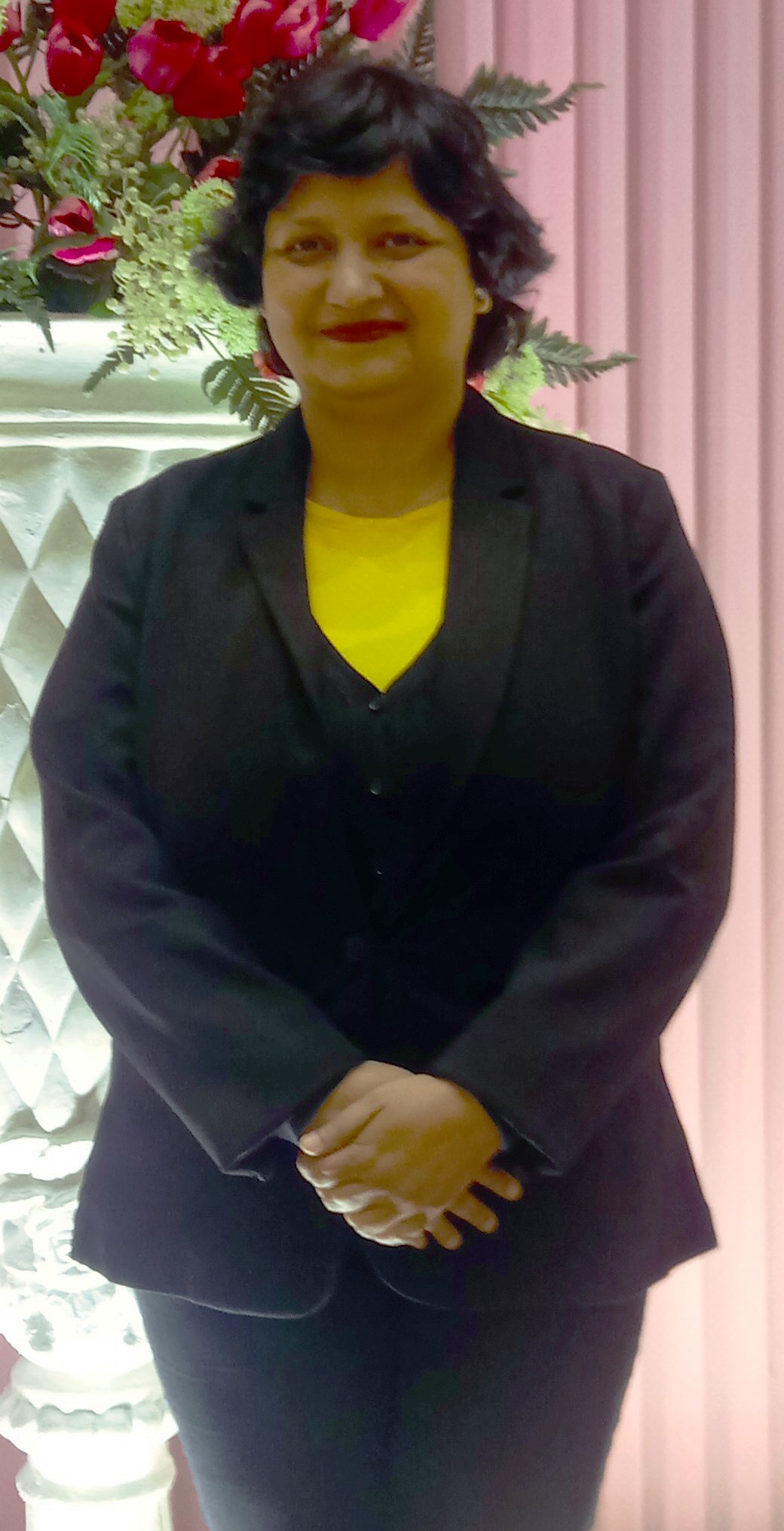
Goldy Honorer-Descartes
Goldy Honorer-Descartes, born Shradha Mukherjee. Goldy Honorer-Descartes pen name/nickname/preferred name in honour of my intellectual father René Descartes. The French 'Honorer Descartes', translates to 'Honouring Descartes'.
Call To Action
I am available for on-site, remote, or hybrid positions in science and technology, as a student, staff member, post-doc, intern, consultant, project manager (either for courses or research), including anonymous roles such as an 'anonymous' content creator of video, audio, and written media, and as an 'anonymous' researcher for entire scientific method cycle from hypothesis to product launch (ideation, experimentation, data analysis, result interpretation, grant writing, manuscript writing and clinical trials or other translation avenues), compensated either as an one-time payment, salary, or scholarship. I am interested in pursuing positions in countries that are at the forefront of environmental science, computational biology, neuroscience, oncology, microbiology, nanotechnology and cybersecurity, namely, EU member states, UK, Australia, Canada, New Zealand, and Switzerland, while for hardware, I am specifically interested in Japan and South Korea. Among other tech-science hubs, Loxbridge England, Canada's British Columbia life science hub, Germany's Berlin life science and tech hub, France's Paris life science and tech hub, 'New England' Boston-Cambridge Biotech hub, San Francisco Bay Area 'Silicon Valley' and Shenzhen-Hong Kong-Guangzhou 'Guangdong–Hong Kong–Macao Greater Bay Area', I'm especially interested in Germany's 'Grey City' Berlin, France's 'City of Light' Paris, 'The Pearl of The Orient' and 'London of the East', namely Hong-Kong, Loxbridge (London, Cambridge or Oxford) England, British Columbia Canada and Boston-Cambridge 'New England' US.
About me
What are my accomplishments? (proven merit) My education includes graduate level degrees in chemistry, biochemistry and computation (health informatics). My research publications as first and/or corresponding author (2013-present) are in domains of neuroscience, neurological diseases, cancers, stem cells, neurotoxicity and heavy metal toxicity. These publications utilised techniques of molecular biology, biochemistry, bioinformatics, genomic/omics, statistics, machine learning, AI, natural language processing and network analysis. I have published papers (2013-present) in and reviewed papers (2020-present) for, @Nature https://www.nature.com/siteindex, @FrontiersIn https://www.frontiersin.org/journals and @ElsevierConnect https://www.elsevier.com/products/journals (Cell Press) tier 1 highly cited high impact family of journals in addition to others.
What are my soft skills? (skills that have helped me achieve my proven merit) To put it simply, my soft skills are rooted in my passion for knowledge work. 'Give me problems, give me work, give me the most abstruse cryptogram or the most intricate analysis, and I am in my own proper atmosphere' quote from Sherlock Holmes, The Sign of Four by Sir Arthur Conan Doyle. My research experience has potentiated my ability to plan, problem-solve and perform intricate scientific experiments to unravel novel discoveries. My experience in scientific communication through presentations and publications, has honed my ability to convey complex ideas and technical information in a concise and accessible manner. Taken together, I am confident my proven merit and work ethics, make me an ideal candidate to contribute to your organization's success and create tangible value.
What motivates me? (driving force) The goal is to keep learning because learning has no age limit, infact it is limitless! Learning is an adventure, and "Adventure is worthwhile in itself"-quote by Amelia Earhart ref:https://www.ameliaearhart.com/quotes. My passion is to learn and then apply that learning, wherein the application itself becomes project based learning. Indeed, this learn-and-apply cycle, is both the journey and the destination for me. I hope this learn-and-apply cycle will be sustainable i.e. the learn-and-apply cycle I hope will not only enrich me at an intrinsic level, but also enrich me at an extrinsic (financial) level en route to spiritual independence and financial independence.
All my motivations and goals are focused on paying thanks, with service and prayers, for some of the debt I owe to the civilized developed world, especially but not limited to England, for the freedom to access and enjoy (all that I love) their knowledge of sciences (natural sciences, tech, energy, AI, digital world) and knowledge of humanities (arts, music, literature, culture, style, movies/tv, cuisine, culture of exploraton/discovery/building/wanderlust and above all Christianity); gift of Christianity is the greatest because without it there is neither 'logos' (logic) nor 'ethos' (character/ethics) that are foundational for science, rationalism/philosophy, creativity/arts, culture, and society, basically without Christianity there is no civilized human society.What positions am I looking for? I am available for on-site, remote, or hybrid positions in science and technology, as a student, staff member, post-doc, intern, consultant, project manager (either for courses or research), including anonymous roles such as an 'anonymous' content creator of video, audio, and written media, and as an 'anonymous' researcher for entire scientific method cycle from hypothesis to product launch (ideation, experimentation, data analysis, result interpretation, grant writing, manuscript writing and clinical trials or other translation avenues), compensated either as an one-time payment, salary, or scholarship. These positions should preferably be on topics where I have knowledge gaps and greatest interest, namely, in environmental science, cybersecurity, nanotechnology and microbiology. Having said that, I am also interested in research on topics I have previously worked on, namely, cancer, neuroscience (neurodegeneration and neurodevelopment), stem cells/regenerative medicine, health informatics and bioinformatics. I am interested in pursuing positions in countries that are at the forefront of environmental science, computational biology, neuroscience, oncology, microbiology, nanotechnology and cybersecurity, namely, EU member states, UK, Australia, Canada, New Zealand, and Switzerland, while for hardware, I am specifically interested in Japan and South Korea. This collaboration would be mutually beneficial; given my proven track record and results-driven approach to work, I can contribute by developing a translational product in the context of biomedical research to solve 'the bench to bedside problem' or more broadly speaking, preparing a project for product launch (data insights to actionable policies and on-the-ground actions) to solve 'the last mile problem'. In return, I will gain valuable expertise to address any knowledge gaps in my current skill set. Let me explain my knowledge gaps:
What motivates me? (quotable quotes)
"Dubito Ergo Cogito; Cogito Ergo Sum" (Latin)
"I doubt therefore I think; I think therefore I am" (English)
-quote by René Descartes. Two main books by René Descartes, are a) Meditations on First Philosophy, in which the existence of God and the immortality of the soul are demonstrated (Latin: Meditationes de Prima Philosophia, in qua Dei existentia et animæ immortalitas demonstratur) and b) Discourse on the Method of Rightly Conducting One's Reason and of Seeking Truth in the Sciences (French: Discours de la Méthode pour bien conduire sa raison, et chercher la vérité dans les sciences)
ref: https://www.bbc.co.uk/programmes/p02pdc6n
"The self is a relation that relates to itself....(for Kierjegaard, the self becomes impossible without existence of a divine 'other' who exists outside and beyond the human)" (English)
-quote by Soren Kierkegaard from one of his notable books 'The Sickness Unto Death: A Christian Psychological Exposition for Upbuilding and Awakening'.
ref: Link1 from www.sorenkierkegaard.nl ref: Link2 The Self and the modern debate on Selfhood from Cambridge University ref: Link3 Selflove and Selfhood from Cambridge Universityref: Subjectivity, Irony and the Crisis of Modernity a free course from University of Copenhagen
"Easy to do are things that are bad and harmful to oneself. But exceedingly difficult to do are things that are good and beneficial" (English)
-quote from 'The Dhammapada (The Buddha's Path To Wisdom), Chapter 12, The Self'
ref: https://www.buddhanet.net/e-learning/buddhism/dp12
"(Mr. Trevor) I don’t know how you manage this, Mr. Holmes, but it seems to me that all the detectives of fact and of fancy would be children in your hands. That’s your line of life, sir, and you may take the word of a man who has seen something of the world...(Sherlock Holmes)And that recommendation, with the exaggerated estimate of my ability with which he prefaced it, was, if you will believe me, Watson, it was the very first thing which ever made me feel that a profession might be made out of what had up to that time been the merest hobby."
-quote from 'The Gloria Scott' story from The Memoirs of Sherlock Holmes by Sir Arthur Conan Doyle
ref: The Strand Magazine 1893 https://www.arthur-conan-doyle.com/wiki/The_Adventure_of_the_Gloria_Scott and Project Gutenberghttps://www.gutenberg.org/ebooks/834
"(James Bond) I'm truly sorry to have to dash off like this but there's been a bit of a flap at the office...(Bond Girl) What kind of work do you do anyways? (James Bond) I travel..sort of a liscenced troubleshooter...keep in touch...(Bond Girl) anytime anyplace...(James Bond) another time another place."
-quote from 007 James Bond movie 'Thunderball' 1965, one of the best yet underrated movies of all time.
ref: Wikipedia https://en.wikipedia.org/wiki/Thunderball_(film)
"Standing in the dock at Southampton, Trying to get to Holland or France, The man in the mac said, 'You've got to go back', You know they didn't even give us a chance, Christ you know it ain't easy, You know how hard it can be, The way things are going, They're going to crucify me"
-quote from 'The Ballad Of John And Yoko' song by The Beatles, one of the best and one of the most European songs of all time
ref: Wikipediahttps://en.wikipedia.org/wiki/The_Ballad_of_John_and_Yoko
 smukher2@protonmail.com
 smukher2@mailfence.com
 NCBI Pubmed
 EuroPMC
 FrontiersLoop
 ElsevierScopus
 SemanticScholar
 HAL Open Science
 Academia Edu